Modern IT spending is no longer just about capacity; it’s about ‘cloud smart’ flexibility. According to IDC, approximately 80% of organizations have recalibrated their strategies to optimize specific workloads for the right environment—moving away from a one-size-fits-all public cloud model toward a more intentional hybrid approach. In this landscape, the rapidly evolving enterprise cloud environment demands solutions that can seamlessly balance performance, security, and operational efficiency.
This technical analysis examines two distinct approaches to enterprise cloud infrastructure: Zadara’s sovereign cloud model and Huawei’s DCS (Datacenter Virtualization Solution). While both platforms serve enterprise needs, they represent fundamentally different philosophies in cloud service delivery, each with unique strengths and considerations for modern IT decision-makers.
→ Want a quick overview? Check out our comparison table at the end.
Platform Architecture and Core Models
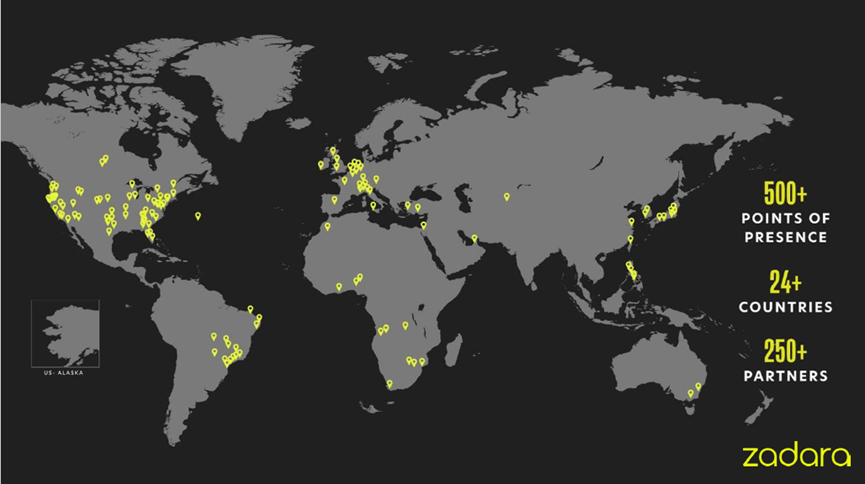
Zadara operates as a distributed cloud service model that combines compute, storage, and networking capabilities delivered across multiple locations and partner sites. This architecture specifically targets sovereign and edge deployments while providing GPU-backed AI services. The platform functions as a managed sovereign AI cloud, designed from the ground up to address data residency and compliance requirements without compromising on cloud-native capabilities.
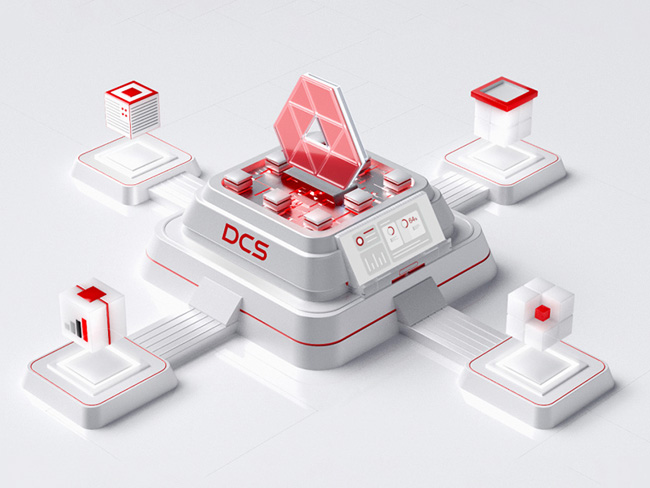
Huawei DCS (Data Center Virtualization Solution) takes a different approach, positioning itself as a full-stack enterprise virtualization platform primarily aimed at SMB and enterprise datacenters. The solution is about building private/hybrid clouds with unified management for on-premise infrastructure, offering flexibility, performance, and control.
Huawei Cloud is the public cloud platform providing global, scalable services, with DCS often integrating into it or offering hybrid solutions;
This approach centers around an on-premises virtualization platform that extends into public cloud services rather than starting with a cloud-first architecture.
The architectural differences become apparent when examining deployment models. Zadara’s distributed approach enables organizations to maintain cloud-like operations while keeping data and workloads within specific geographic or regulatory boundaries. This design philosophy addresses the growing need for digital sovereignty without sacrificing the operational benefits of public cloud services.
Data Sovereignty and Compliance: A Critical Comparison
Data sovereignty has become a critical requirement for organizations operating in regulated industries, government sectors, and regions with strict data protection laws. Zadara’s platform incorporates a strong built-in sovereign model specifically designed for sovereign deployments. This approach ensures that data remains within designated boundaries while still providing access to full cloud services and capabilities.
The platform’s sovereignty features extend beyond simple geographic data residency. Zadara enables clear separation between vendor access and customer operations, allowing organizations to maintain complete control over their data and infrastructure while benefiting from managed services. This separation addresses concerns about foreign access to sensitive data and provides transparency in vendor relationships.
Huawei DCS offers public cloud services with compliance control features, though sovereignty depends heavily on who operates the infrastructure. While the platform includes compliance capabilities, the traditional public cloud model may not fully address the sovereignty requirements of organizations in sensitive sectors or regions with specific regulatory constraints.
AI Workloads Performance and Optimization
Organizations running AI workloads need specialized infrastructure that can handle intensive computational requirements while providing the flexibility to scale resources dynamically.
Many cloud providers are experiencing growing demand for AI services. However, most struggle to afford the large-scale infrastructure investments required to build competitive AI clouds without upfront customer commitments, while customers, in turn, are reluctant to commit before such AI clouds are operational.
Zadara’s platform was designed specifically for AI training and inference at the edge, with explicit AI GPU cloud offerings that optimize performance for machine learning workloads. The platform’s edge-focused architecture provides significant advantages for AI applications that require low latency or need to process data close to its source.
Also, Zadara is one of the first NVIDIA design and integration partners to enable multitenancy for high performance scalable NVIDIA AI factories by adhering to NVIDIA reference architecture for multi-tenant AI clouds.
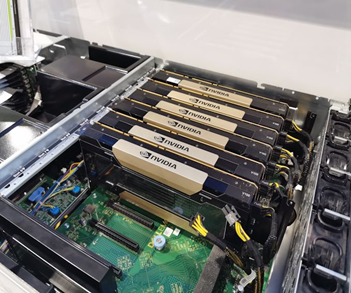
Huawei DCS supports AI workloads through standard cloud engines, with GPUs attached to virtualization hosts. While this approach provides AI capabilities, it lacks the specialized optimization and edge-focused design that characterizes purpose-built AI cloud platforms. The traditional virtualization approach may introduce additional overhead and complexity for organizations with intensive AI requirements.
The difference in AI optimization becomes particularly relevant for organizations planning large-scale machine learning deployments or those requiring real-time inference capabilities. Zadara’s specialized approach provides better resource utilization and performance characteristics for these demanding workloads.
Managed Cloud Services vs Self-Operated Platforms
The choice between managed cloud services and self-operated platforms significantly impacts operational overhead, time to value, and long-term total cost of ownership.
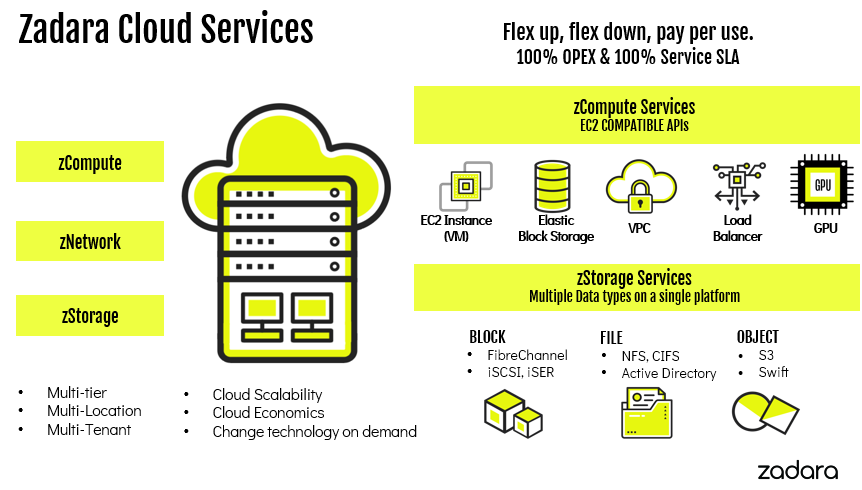
Zadara operates as a fully managed service, providing cloud-like operations without requiring customers to build and maintain complex infrastructure teams. This managed approach enables organizations to focus on their core business objectives rather than infrastructure management. The platform handles routine maintenance, updates, security patches, and capacity planning, while customers retain control over their applications and data. This model particularly benefits organizations that want cloud capabilities without the operational complexity of traditional on-premises deployments.
Huawei DCS follows a customer-operated model, requiring organizations to manage their own infrastructure, maintenance, and operations. While this approach provides direct control over all aspects of the platform, it also demands significant internal expertise and ongoing operational investment.
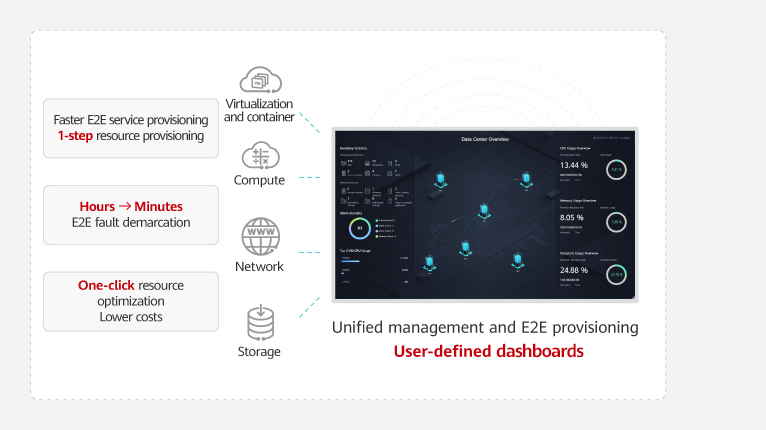
The operational model differences extend to deployment timelines and complexity. Zadara’s managed approach typically enables deployment within weeks, as the platform leverages basic infrastructure requirements, such as: rack space, cooling and connectivity, and standardized deployment processes. Huawei DCS deployments often require longer design, build, and implementation phases due to the custom nature of on-premises installations.
Hybrid Cloud Deployment Flexibility and Options
Hybrid cloud deployment models provide the flexibility to balance performance, cost, and compliance requirements across different workload types and business needs.
Zadara’s platform supports edge, on-premises, hybrid, and multi-cloud deployment options, enabling organizations to create sophisticated distributed architectures that span multiple environments. This deployment flexibility proves particularly valuable for organizations with diverse requirements across different business units, geographic regions, or regulatory environments. The platform’s consistent management interface and operational model work across all deployment types, simplifying administration and reducing complexity.
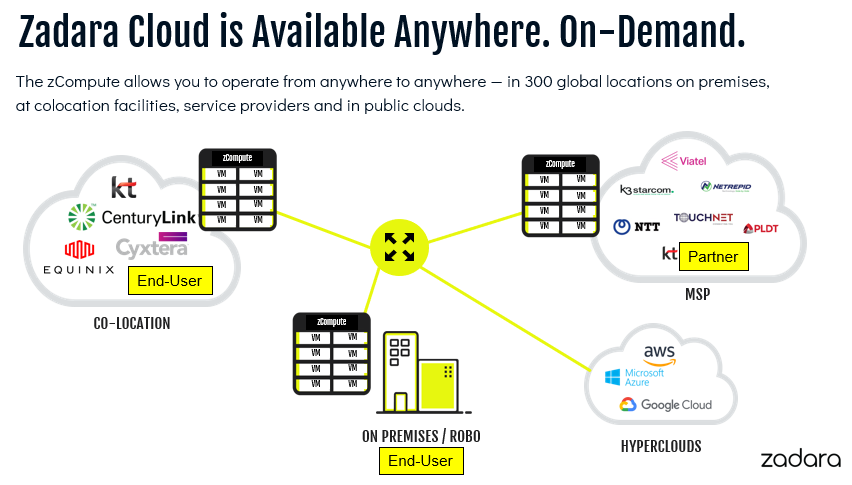
Huawei DCS offers deployment options for public cloud and enterprise datacenters, focusing primarily on traditional on-premises and public cloud models. While this approach covers basic hybrid requirements, it may lack the sophisticated edge and multi-cloud capabilities that modern enterprises increasingly require.
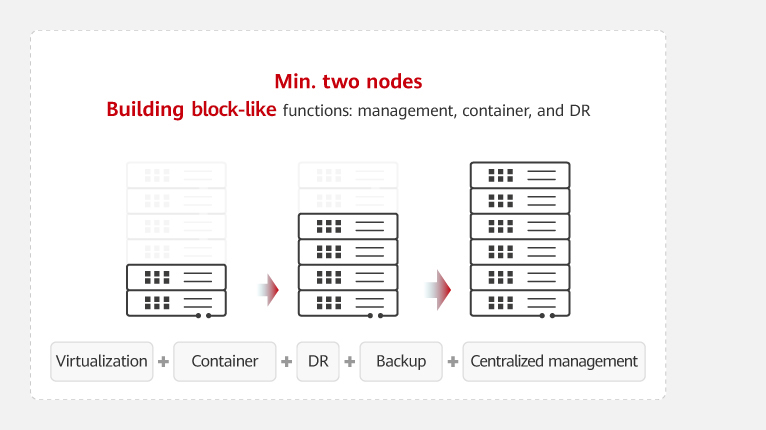
The deployment flexibility differences become critical when organizations need to support distributed workloads, edge computing requirements, or complex multi-region architectures. Zadara’s broader deployment options provide more strategic flexibility for evolving business requirements.
Security and Access Management
Robust identity and access management capabilities are essential for enterprise security, particularly in distributed cloud environments.
Zadara provides comprehensive IAM features, security groups, multi-factor authentication, and encryption options designed to work consistently across all deployment models. The platform’s security architecture enables clear vendor access control, allowing organizations to maintain strict separation between their operations and vendor support activities. This separation addresses concerns about unauthorized access while still enabling managed service benefits.
Huawei DCS integrates security features into its CloudStack solution with multiple security layers. However, the platform’s tighter vendor coupling may create challenges for organizations requiring strict access controls or those operating in sensitive environments where vendor access must be carefully managed.
Cost Structure and Risk Analysis
Effective disaster recovery planning requires cloud platforms that offer reliable backup and restoration capabilities with predictable cost structures.
While many vendors claim to offer “cloud-like” models, Zadara Sovereign AI cloud delivers a true pay-as-you-go, fully managed infrastructure as a service that stands apart from traditional licensing.
- The commercial model scales costs with actual usage, providing cost predictability and avoiding over-provisioning expenses.
- The platform’s managed service model also reduces the hidden costs associated with infrastructure management, including staffing, training, and ongoing operational expenses.
Organizations can more accurately predict total cost of ownership when operational overhead is included in the service model.
Huawei DCS operates with a two-license model that may provide cost advantages for specific deployment scenarios but could create complexity in scaling and cost management. The customer-operated model also requires organizations to account for internal operational costs and expertise requirements.
Risk considerations extend beyond technical capabilities to include procurement, compliance, and strategic factors. Organizations must evaluate their specific regulatory environment, risk tolerance, and long-term strategic objectives when choosing between these platforms.
Strategic Recommendations
The choice between Zadara and Huawei DCS ultimately depends on organizational priorities, regulatory requirements, and strategic objectives. However, several factors favor Zadara’s approach for most enterprise scenarios.
Zadara’s managed sovereign cloud model addresses the growing need for data sovereignty while maintaining cloud-native capabilities and operational efficiency. The platform’s specialized AI optimization, deployment flexibility, and managed service model provide significant advantages for organizations seeking to modernize their infrastructure without increasing operational complexity.
The platform’s faster deployment timelines, lower operational overhead, and reduced procurement risks make it particularly attractive for organizations that need to balance innovation speed with compliance requirements. The clear vendor separation and flexible deployment options also provide strategic advantages for long-term technology planning.
Organizations considering these platforms should evaluate their specific requirements for sovereignty, AI capabilities, operational models, and risk tolerance. While Huawei DCS may serve certain traditional enterprise virtualization needs, Zadara’s modern cloud architecture and managed service approach align better with current enterprise trends toward cloud-native operations and distributed computing requirements.
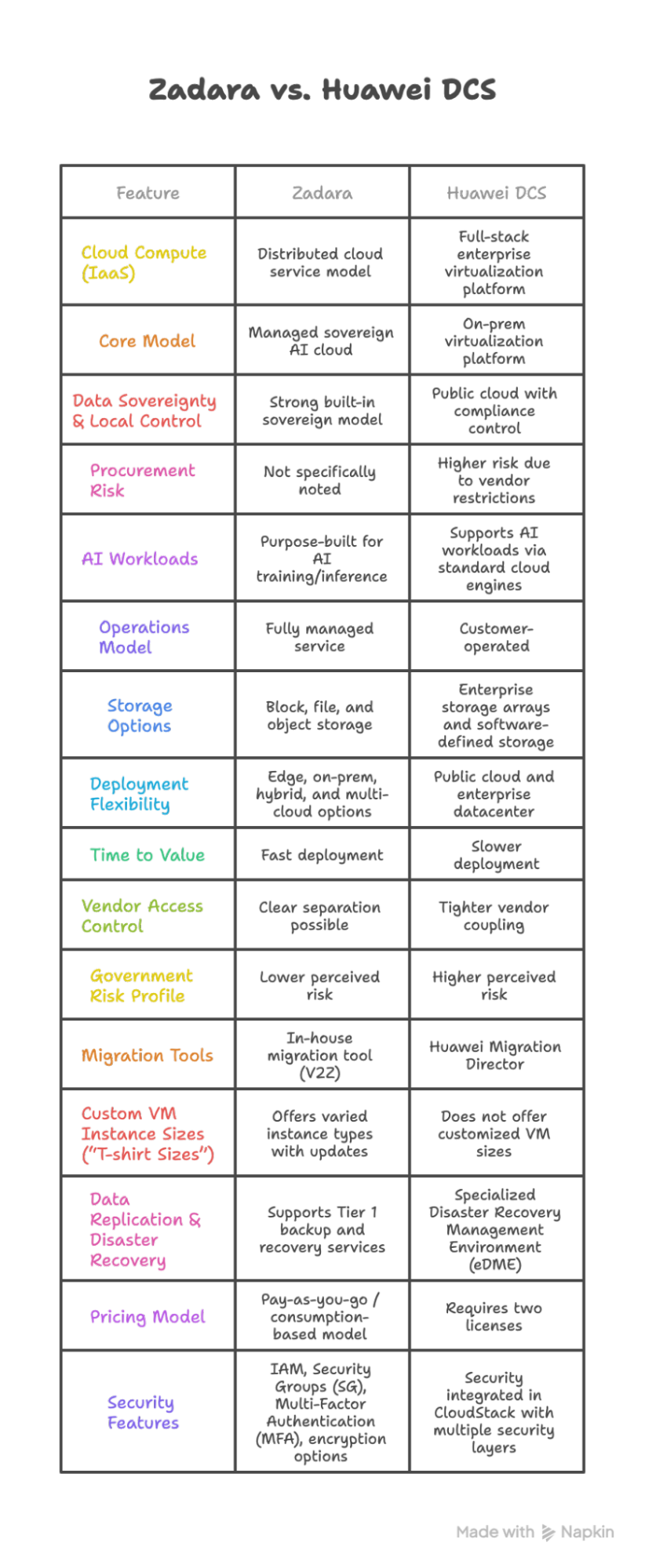
Features Table
The future of enterprise cloud infrastructure increasingly favors platforms that can deliver public cloud capabilities while addressing sovereignty, compliance, and edge computing requirements. Zadara’s architecture and service model position it well for these evolving enterprise needs, making it the more strategic choice for organizations planning their long-term cloud infrastructure investments.