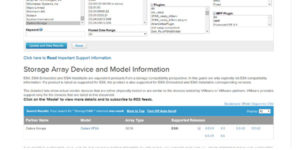
Zadara VPSA now VMware Certified
We think that it shouldn’t go unnoticed that Zadara VPSA is now officially VMware certified

We think that it shouldn’t go unnoticed that Zadara VPSA is now officially VMware certified

For businesses to run more efficiently and effectively, reducing the time required for storage management is as important as reducing its overall cost; most often these two are contingent on one another.

Despite the best intentions of the public cloud infrastructure providers, issues do happen from time to time. Some problems are more significant than others, as we saw with the recent Amazon Web Services (AWS) DynamoDB outage (details here). The impact to AWS customers was widespread and although it would be easy to dismiss the affected services as trivial (Netflix, IMDB, Tinder, Buffer), these are still clients running production workloads. Do a quick Google search and it’s easy to find many other similar examples, including this one affecting Microsoft’s Azure Storage Service.

Zadara Storage is changing the game by bringing the information technology industry and enterprise storage to a whole new level. Zadara’s storage-as-a-service solution helps eliminate IT headaches by fully managing your storage for you. All this, with no compromise: you still get all the great features you would expect from a traditional storage system. Here, we break it down for you in the 4 most important aspects: time, cost, scalability, and commitment.

In the first part of this blog I reviewed some of the new operational challenges that have to be undertaken to ensure that storage runs smoothly, and their ensuing costs.

It’s definitely a truism that the absolute cost of storage, measured per GB has continued to drop steadily over the last 15 years. In fact, when I was involved in purchasing storage hardware it was common to put in place a quarterly price reduction of around 5% on any long-term deals. Prices have dropped over time because the disk manufacturers have been able to continue to increase the capacity of data stored in a standard drive form-factor, delivering more capacity for the same physical amount of space, power and cooling.

Reduce Amazon Charges and Increase B2S3 Throughput Utilizing an HTTPS Proxy in EC2