
The Future of Enterprise AI: From GPU Hardware to Sovereign AI Factories
The NVIDIA GTC Berlin keynote delivered by Jensen Huang today marked a defining moment in the evolution of enterprise AI infrastructure. As NVIDIA’s CEO outlined the industry’s shift from accelerated computing to full-scale AI Factory operations.
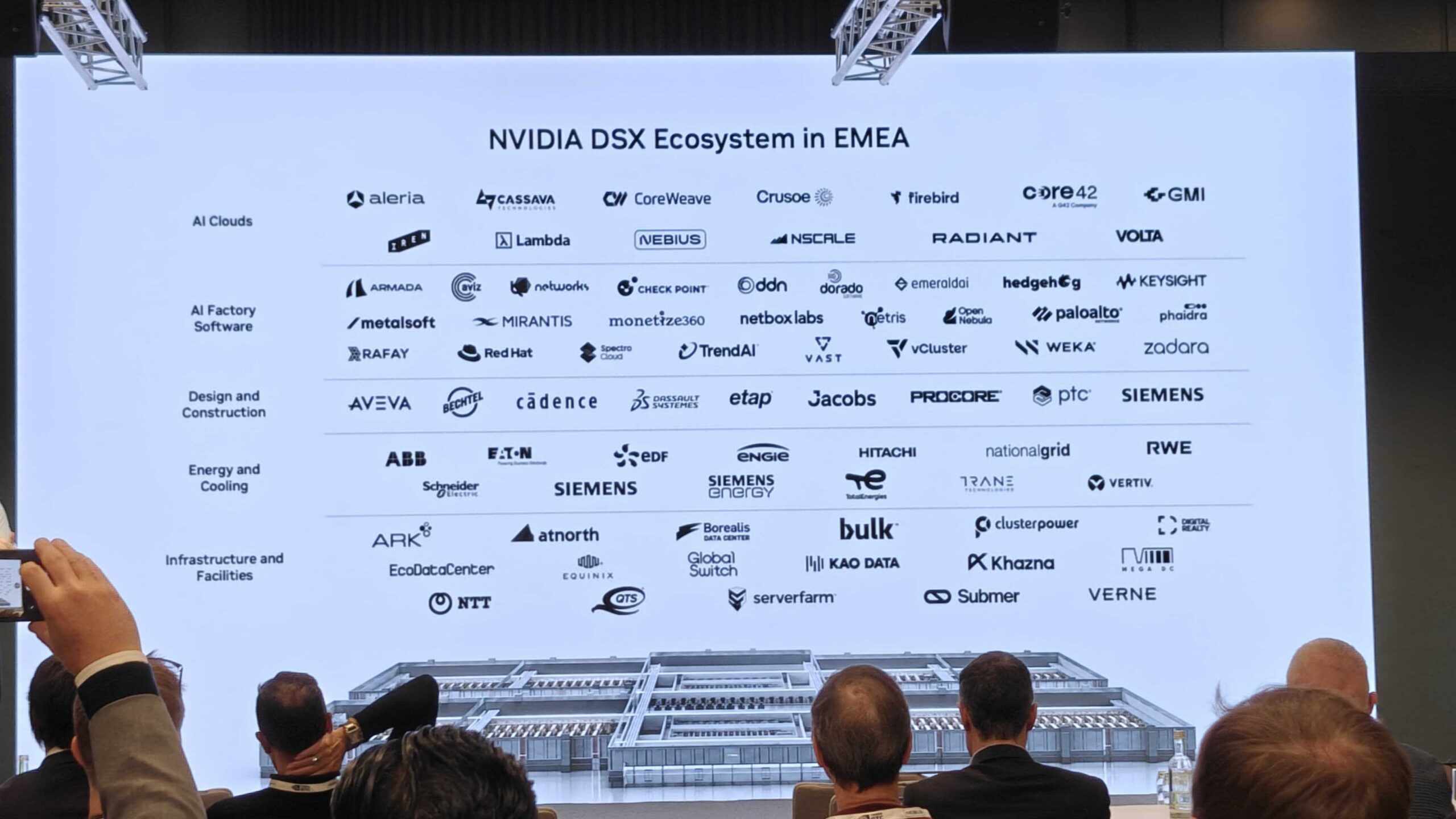
Huang’s message was clear: purchasing GPUs represents only the starting line. The real opportunity lies in operating them as a secure, sovereign, multi-tenant cloud infrastructure. While enterprises across Europe grapple with data sovereignty requirements and the operational complexity of managing GPU clusters, Zadara provides the bridge between NVIDIA’s cutting-edge hardware and the cloud-native operations that modern AI demands. With EC2 API compatibility and unified management across both general-purpose compute and GPU resources, Zadara enables organizations to deploy what Huang described as true “AI Factories”—localized, sovereign intelligence infrastructure that puts control firmly in the hands of European enterprises.
GTC 2026 Berlin: The Shift from Accelerated Computing to AI Factory Operations
[11:00 AM CET] Opening Remarks: Beyond Faster Chips
The NVIDIA GTC Berlin keynote opened with Huang addressing a packed audience at Berlin’s Tempodrom, immediately setting an ambitious tone for the day. Rather than focusing on incremental performance improvements, Huang framed the discussion around a fundamental restructuring of how enterprises approach AI infrastructure.
“This conference is going to cover every single layer of the five-layer cake of artificial intelligence. We’re past the point of talking about faster chips. Everything points to a total shift in the industry’s DNA.”
This opening statement at gtc 2026 signaled NVIDIA’s recognition that the AI infrastructure conversation has matured beyond hardware specifications. The “five-layer cake” Huang referenced encompasses the full stack: silicon, systems, networking, software, and applications. For cloud operators and enterprises, this means the challenge is no longer simply acquiring powerful GPUs—it’s about orchestrating these components into a cohesive, operational platform.
Why This Matters for Cloud Operators: Zadara’s approach directly addresses this multi-layer complexity. Zadara helps cloud operators bring compute, GPU resources, and cloud management together in a unified operational environment. This approach reduces the complexity of managing infrastructure and gives enterprises a more practical path from hardware investment to usable AI services.
[11:45 AM CET] Hardware Roadmap: From Blackwell to Vera Rubin
As the NVIDIA conference progressed into its technical deep-dive, Huang outlined NVIDIA’s aggressive hardware roadmap, emphasizing the transition from current Blackwell deployments to the production-ready Vera Rubin platform and the NVIDIA DSX Full-Stack AI Factory Platform.
“CUDA is literally integrated into every single ecosystem. As we scale infrastructure to power complex enterprise networks, efficiency must be measured across the entire multi-tenant system, not just the individual processor.”
This statement reveals a critical insight that many enterprises overlook: GPU performance in isolation is meaningless. What matters is system-level efficiency across multi-tenant environments where multiple workloads, teams, and applications compete for resources. The NVIDIA gtc 2026 keynote made it clear that NVIDIA’s vision extends beyond selling accelerators—it’s about enabling efficient, shared infrastructure that maximizes utilization and ROI.
Why This Matters for Enterprises: Zadara’s competitive advantage becomes evident here. Managing both general-purpose compute and GPU cloud through a single pane of glass isn’t just convenient—it’s essential for the multi-tenant efficiency Huang described. Zadara’s platform supports the full spectrum of NVIDIA architectures, including Spectrum-X Ethernet and InfiniBand networking, ensuring that as enterprises scale from Hopper to Blackwell to Vera Rubin, their cloud infrastructure evolves seamlessly without requiring platform migrations or operational disruptions.
[12:30 PM CET] Sovereign AI: Europe’s Intelligence Infrastructure
The gtc conference took a decidedly European focus as Huang addressed data sovereignty, regulatory compliance, and the imperative for regional AI capabilities. This segment resonated deeply with the Berlin audience, as European enterprises face some of the world’s strictest data protection and sovereignty requirements.
“Europe is focused on building its own intelligence—with the control, knowledge, and tools to put AI to work locally. Sovereign AI isn’t just about regulatory compliance; it is about absolute data ownership at a regional level.”
Huang’s emphasis on “absolute data ownership” speaks directly to the concerns of European CIOs and data protection officers. The NVIDIA gtc 2026 registration for this event saw significant interest from organizations seeking to understand how they can deploy AI capabilities while maintaining full control over their data, models, and infrastructure.
Why This Matters for Data Sovereignty: Zadara’s architecture is purpose-built for sovereign AI deployment. Unlike hyperscale cloud providers that centralize infrastructure across borders, Zadara enables enterprises to deploy NVIDIA-powered AI clouds within their own data centers or chosen regional facilities. This approach ensures that data never leaves jurisdictional boundaries, models remain proprietary, and organizations maintain complete operational control. This approach helps enterprises pursue accelerated AI capabilities while retaining control over where their infrastructure and data reside.
[01:00 PM CET] Keynote Conclusion: Digital Twins and Industrial AI
As the NVIDIA GTC Berlin keynote drew to a close, Huang connected the technical discussions back to practical industrial applications, emphasizing Europe’s strength in manufacturing and industrial operations.
“Europe’s industrial powerhouse relies on digital twins and sovereign infrastructure. Turning raw computing capacity into fully sovereign, localized ‘AI Factories.’”
This closing message reinforced the central theme: AI infrastructure must serve real business outcomes, not just technical benchmarks. For European manufacturers, automotive companies, and industrial enterprises, the ability to create digital twins, run simulations, and deploy agentic AI requires infrastructure that’s both powerful and locally controlled.
Why This Matters for Industrial AI: Zadara’s operational lifecycle—Build, Cloudify & Launch, Run Always On—directly supports the AI Factory vision Huang articulated. Enterprises can start with NVIDIA hardware, transform it into a cloud-native platform with Zadara’s management layer, and operate it continuously with the reliability and control that industrial applications demand. The platform’s support for both inference and training workloads, combined with its agentic AI capabilities, makes it ideal for the digital twin and simulation workloads that define Industry 4.0.
Inside the NVIDIA Conference: Four Key Moments That Define Enterprise AI’s Future
The Operational Lifecycle: How Zadara Delivers on the AI Factory Vision
The NVIDIA conference made one thing abundantly clear: the gap between owning GPU hardware and operating an AI Factory is substantial. Zadara bridges this gap through a three-phase operational lifecycle that transforms NVIDIA infrastructure into production-ready, sovereign AI clouds.
Phase 1: Build
Organizations begin by deploying NVIDIA hardware—whether DGX systems, OEM HGX configurations from Dell, Supermicro, or Lenovo, or custom builds incorporating Grace Hopper, Hopper, or Blackwell architectures. Organizations can select hardware configurations that fit their workload and deployment requirements, while Zadara provides the cloud management and operational capabilities around their infrastructure. The platform supports both Spectrum-X Ethernet and InfiniBand networking, ensuring optimal performance for different workload types.
Phase 2: Cloudify & Launch
This is where Zadara’s cloud operating platform plays a central role. The zCompute platform converts raw GPU infrastructure into a fully operational, multi-tenant AI cloud with EC2 API compatibility. This means enterprises can leverage existing cloud-native tools, workflows, and automation while maintaining sovereign control. The single pane of glass management interface unifies general-purpose compute and GPU resources, eliminating the operational silos that plague many AI infrastructure deployments. Security, compliance, and access controls are built into the platform, ensuring that sovereign AI requirements are met from day one.
Phase 3: Run, Always On
Operational excellence requires more than initial deployment—it demands continuous, reliable operation at scale. Zadara’s platform provides the monitoring, management, and optimization capabilities needed to run AI Factories in production. Multi-tenant architecture ensures efficient resource utilization across teams and projects, maximizing ROI on expensive GPU investments. Support for both inference and training workloads means the platform adapts to changing business needs, while agentic AI capabilities enable sophisticated, autonomous operations that align with the vision Huang outlined at gtc 2026.
What the GTC Conference Revealed About Sovereign AI Infrastructure
Live Blog Summary: Keynote Themes and Zadara Solutions
| Keynote Focus Area | Live Keynote Announcement / Quote | Zadara Solution Alignment |
|---|---|---|
| Accelerated Hardware & AI Factory Pods | “We’re past the point of talking about faster chips. Everything points to a total shift in the industry’s DNA.” – Focus on five-layer AI stack and DSX Full-Stack AI Factory Platform | Zadara focuses on the cloud operations layer, helping organizations manage compute and GPU resources, automate provisioning, and deliver multi-tenant AI services on their chosen infrastructure. |
| Sovereignty & Compliance | “Sovereign AI isn’t just about regulatory compliance; it is about absolute data ownership at a regional level.” – Emphasis on European data control and local intelligence infrastructure | Zadara enables true sovereign AI deployment by allowing enterprises to operate NVIDIA infrastructure within their own facilities or chosen regional data centers. Complete data ownership, jurisdictional control, and compliance with European regulations while maintaining full NVIDIA AI capabilities. |
| Multi-Tenancy & ROI | “Efficiency must be measured across the entire multi-tenant system, not just the individual processor.” – Focus on system-level optimization and shared infrastructure economics | Zadara’s multi-tenant architecture with unified management across general-purpose compute and GPU resources maximizes utilization and ROI. Single pane of glass eliminates operational complexity while enabling efficient resource sharing across teams, projects, and workloads. |
| Cloud Operations & Agentic AI | “Turning raw computing capacity into fully sovereign, localized ‘AI Factories.’” – Vision of operational AI infrastructure supporting digital twins and industrial applications | Zadara’s three-phase lifecycle (Build, Cloudify & Launch, Run Always On) transforms NVIDIA hardware into production-ready AI clouds with EC2 API compatibility. Support for inference, training, and agentic AI workloads enables the AI Factory operations Huang described. |
NVIDIA GTC 2026 Keynote Highlights: Blackwell, Vera Rubin, and the DSX Platform
Transform Your NVIDIA Infrastructure into a Sovereign AI Factory
The NVIDIA GTC Berlin keynote demonstrated that the future of enterprise AI lies not in isolated GPU deployments, but in fully operational, sovereign AI Factories that deliver localized intelligence with complete data ownership. As Jensen Huang emphasized throughout the NVIDIA conference, the industry has moved beyond hardware specifications to focus on operational excellence, multi-tenant efficiency, and sovereign control.
For enterprises ready to operationalize their GPU investments, Zadara provides a cloud management foundation for building and running AI services. Whether organizations are deploying infrastructure today or planning future capacity, the focus is on turning hardware into manageable, scalable cloud resources.
For European enterprises navigating data sovereignty requirements, regulatory compliance, and the operational complexity of AI infrastructure, Zadara offers a clear path forward: maintain absolute control over your data and infrastructure while accessing the full power of NVIDIA’s accelerated computing stack.
Ready to explore how Zadara AI Cloud can turn your NVIDIA GPU infrastructure into a sovereign, profitable AI Factory? Explore how Zadara helps organizations build and operate AI cloud services with greater sovereignty and control.
The insights from gtc 2026 are clear: the opportunity isn’t in buying GPUs—it’s in operating them as a cloud. Zadara makes that opportunity real.