Broadcom Restricted VMware VDDK Access. Here Is What It Means for Your Migration Plan.

TL;DR In August 2026, Broadcom removed public download access to the VMware Virtual Disk Development Kit (VDDK), the library third-party tools use to read VMware virtual disks. Access now runs through Broadcom’s Technology Alliance Program. Agentless migration tools that depend on the VDDK are affected. Migrations into Zadara zCompute are not, because the tooling involved replicates from inside the workload.

For three years, VMware customers under Broadcom have absorbed a series of changes that made staying with VMware more difficult and more expensive. Perpetual licensing ended. The product portfolio was consolidated into bundles. Renewals were repriced. The partner channel was restructured and long-standing resellers lost their authorization.

In August 2026, something different happened. For the first time, a Broadcom change made it harder to leave VMware.

What is the VMware VDDK, and why does it matter?

The VMware Virtual Disk Development Kit (VDDK) is a library that lets software running outside the VMware hypervisor open a VMDK virtual disk file and read its contents. It is the mechanism behind agentless backup and migration operations. Backup and migration products use it to copy a virtual machine’s disks without installing anything inside the guest operating system.

Combined with VMware’s Changed Block Tracking (CBT), which identifies the blocks that changed since the last pass, the VDDK also enables incremental synchronization. That is what allowed large migrations to finish with cutover windows measured in minutes rather than days.

Because it was freely downloadable for years, the VDDK became a foundation of the third-party ecosystem around VMware. Backup products, disaster recovery products and nearly every agentless migration tool on the market were built on top of it.

What did Broadcom change in August 2026?

On 25 August 2026, the public VDDK download pages on developer.broadcom.com began returning 404 errors, including the pages for versions 8.0 and 9.0. There was no announcement. ShapeBlue documented the change and confirmed it across multiple geographic regions.

Broadcom’s response to affected users:


“To ensure the highest standard of security, reliability, and product features, the Virtual Disk Development Kit (VDDK) is no longer available for use or download. Broadcom continues to actively maintain a variety of APIs and SDKs to enable authorized technology alliance partners to build backup and recovery software solutions.”

Support responses indicated the VDDK has moved under VMware’s Technology Alliance Program, which means access now depends on holding a partnership relationship with Broadcom.

Two details in that statement are worth noticing. It preserves access for backup and recovery software. It does not mention migration.

Which VMware migration tools are affected?

As publicly documented at the time of writing:

▪  Red Hat Migration Toolkit for Virtualization. Red Hat’s support guidance states that VDDK images are no longer available through the standard public download paths and that, because the library is proprietary, Red Hat cannot redistribute it. Customers are directed to Broadcom.

▪  Microsoft Azure Migrate. Guidance for VMware sources shifted from agentless to agent-based migration.

▪  Nutanix Move. Community reports of customers unable to obtain the VDDK.

▪  virt-v2v and nbdkit. Both the direct VDDK path and the CBT delta-sync path through the nbdkit VDDK plugin are affected, which in turn affects Apache CloudStack conversion workflows.

▪  Platform9 vJailbreak. The VDDK and NBD path now depends on already holding a copy of the library, and Platform9 has published storage-assisted and proxy-VM alternatives.

Approaches that never read VMDK files from outside the hypervisor are unaffected. That includes OVF export, Proxmox’s native import utility, shared-datastore overlay methods, and any tool that replicates from inside the guest operating system.

Why is this part of a pattern rather than a one-off?

Change
Effect on Customers
1
Perpetual licensing ended, subscription only
→

Costs became recurring and repriceable at every renewal.

2
Product portfolio consolidated into bundles
→

Customers pay for capability they do not use.

3
Renewals repriced
→

Gartner has cited typical increases of 300 to 400 percent. CISPE reported increases of 800 to 1,500 percent to the European Commission. AT&T cited a 1,050 percent increase in court filings.

4
Partner programme restructured to invite-only
→

Long-standing resellers and cloud service providers lost authorization, and customers lost their local advisors.

5
VDDK withdrawn from public download
→

Third-party tools need Broadcom partner status to read VMware virtual disks.

Four of those five changes affect the cost of staying. The fifth affects the ability to leave, and that is a meaningful difference. A price increase is something a customer can negotiate, budget for or escalate. A withdrawn software dependency is not something a customer can negotiate at all.

What does this mean if you are considering leaving VMware?

It means the option to leave is neither free nor permanent.

Most VMware customers hold an informal position: stay for now, and move if things get worse. That position quietly assumes the exit will still be available later on similar terms. August 2026 is evidence that the terms can change without notice.

▪  Planning has more value before a renewal than during one. A costed and tested migration plan is a negotiating position. It has to exist before the renewal conversation to be worth anything in it.

▪  Programme timelines run in quarters. Starting a migration against a renewal deadline usually means buying a bridging renewal, priced at current rates.

▪  Dependencies are worth validating early. Whatever tooling a migration plan assumes, its dependencies can now change without notice.

None of this is an argument for a rushed migration. It is an argument for knowing what a migration would involve before you need the answer.

How do you migrate VMware workloads to Zadara zCompute?

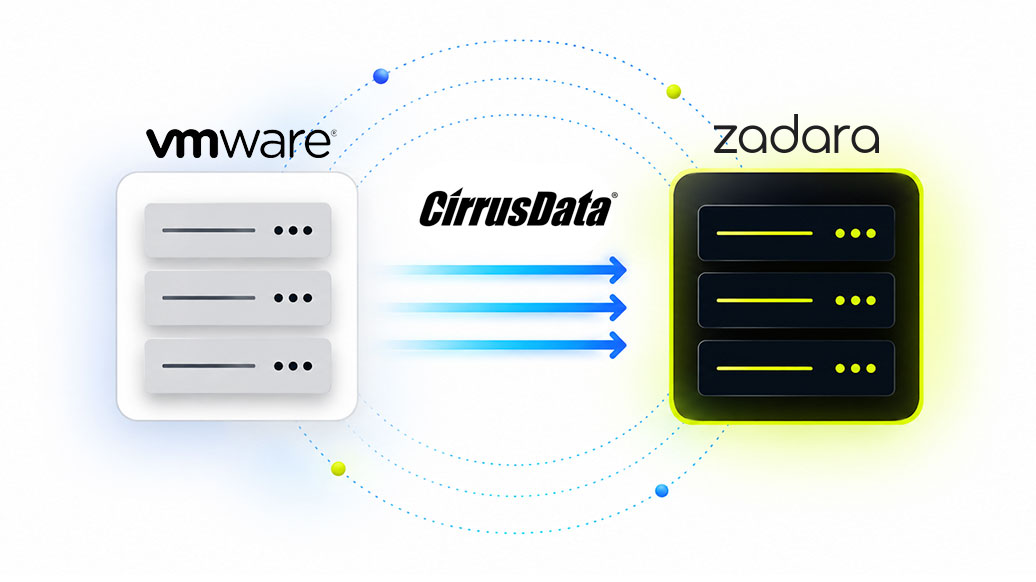
VMware VDDKFor Zadara customers, the migration process from VMware to Zadara zCompute remains unchanged. Zadara’s migration partner, Cirrus Data, does not rely on external processes to access VMware and read VMDK files, nor is the VMware disk-access library involved anywhere in the process. The entire migration is hypervisor agnostic. Additionally, there is no migration appliance or temporary storage environment to deploy and manage. Migrating workloads to zCompute is a fast, automated, simple, and secure program that is based on your business needs, not the requirements of the hypervisor you are leaving.

With patented Transparent Datapath Intercept (TDI) technology, Cirrus Data tracks changes at the source. The migration does not depend on VMware VDDK, Changed Block Tracking (CBT), or VMware snapshots. The practical consequence is that the August 2026 VDDK change had no impact on the migration timelines for Zadara customers moving into zCompute. The process used in March 2026 is the same one customers use today to migrate from VMware to zCompute. No change. No added complexity.

Note: host-based replication means Cirrus Data software must be installed inside the source workload, which requires change-control approval and credentialed access. Appliance virtual machines where nobody has operating system access are the genuine edge case, and in most estates they are a small minority that can be scoped separately.

Zadara zCompute itself is a full-stack compute, storage, and networking platform with AWS-compatible APIs and consumption-based billing, deployable on-premises, at the edge, or in a Zadara cloud region. It has been named a DCIG Top 5 VMware Alternative.
What should you do in the next 90 days?

vddk questions

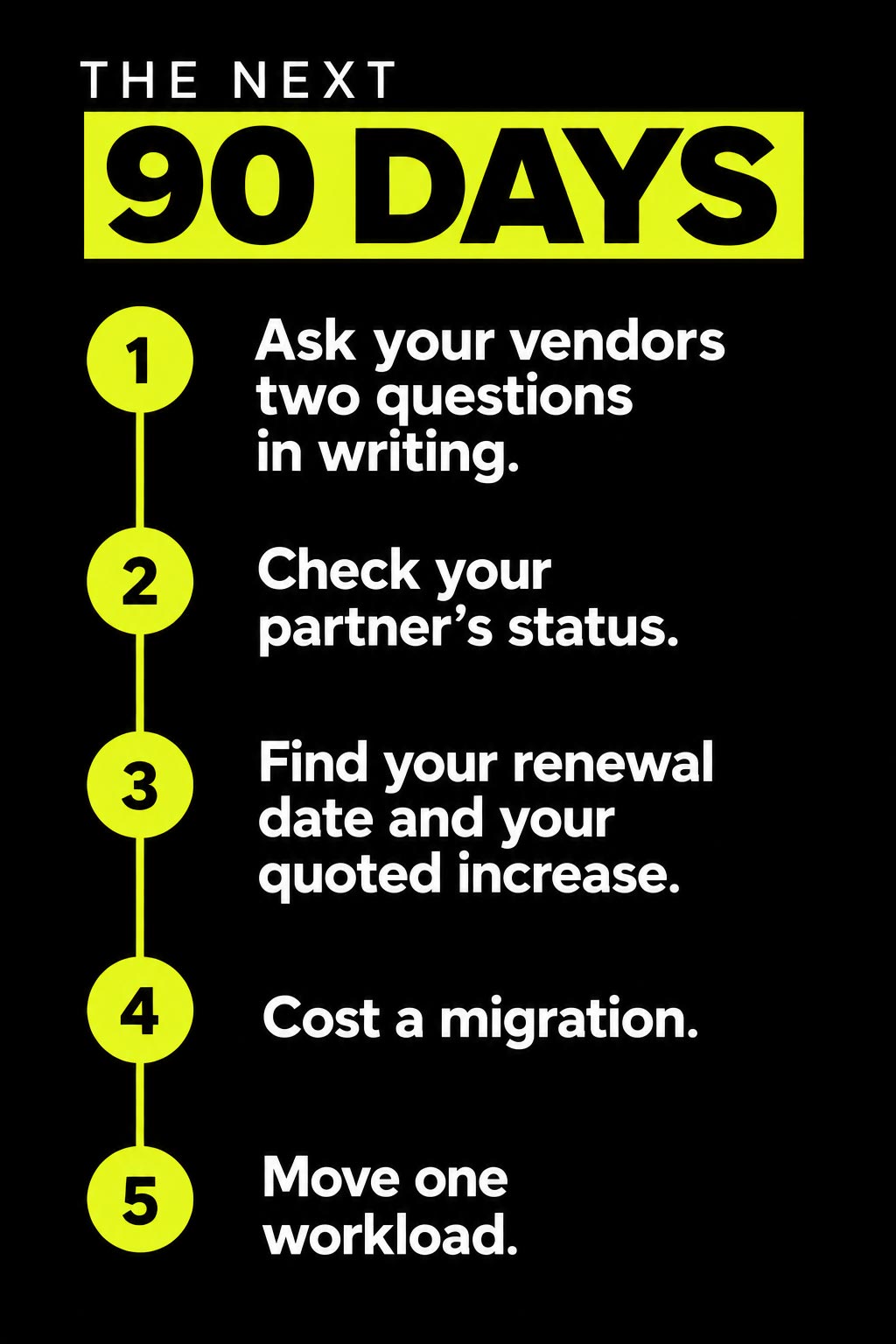
  1. Ask your vendors two questions in writing. Does your product require the VMware VDDK, and does your licence cover migration as well as backup and recovery?

  2. Check your partner’s status. Confirm whether your VMware reseller is still authorized under Broadcom’s current programme. 

  3. Find your renewal date and your quoted increase. Everything else works backwards from that date. 

  4. Cost a migration. Scope the estate, identify what moves easily and what does not, and compare the number against your next renewal. This is a few weeks of work, not a programme. 

  5. Move one workload. A single migrated workload tells you more about feasibility than any assessment document.

Considering a move away from VMware?

Take Control of Your VMware Exit

Frequently asked questions

What is the VMware VDDK?

The VMware Virtual Disk Development Kit (VDDK) is a library that lets software running outside the hypervisor open a VMDK virtual disk and read its contents. It underpins agentless backup and migration tools, which copy a virtual machine’s disks without installing anything inside the guest operating system.

Not from the public download pages. As of 25 August 2026, the VDDK download URLs on developer.broadcom.com return 404 errors. Broadcom has stated the VDDK is no longer available for use or download, and support responses indicate access now runs through VMware’s Technology Alliance Program.

Broadcom’s stated reason is to ensure the highest standard of security, reliability and product features. The company added that it continues to maintain APIs and SDKs for authorized technology alliance partners building backup and recovery software. Broadcom published no advance announcement of the change.

No. It affects tools that read VMDK files from outside the hypervisor. Approaches that do not, including host-based replication, OVF export and shared-datastore methods, are unaffected. The practical effect is that some migration paths now require Broadcom partner status, which can add delay and cost to an exit.

Any tool that replicates from inside the guest operating system rather than reading virtual disk files externally. Host-based block-level and filesystem-level replication tools fall into this category, as do OVF export and shared-datastore overlay methods.

No. VMware workloads move to Zadara zCompute using host-based replication that captures data from inside the workload at block level, so no VMware disk-access library is involved. The August 2026 VDDK change does not affect migration timelines into zCompute.

Where to go next

If a VMware exit is anywhere on your roadmap, the useful next step is a number. Zadara can scope your estate and give you a costed comparison against your next VMware renewal, so that staying or leaving becomes a decision rather than a default. Talk to us about scoping your migration, or read more about Zadara as a VMware alternative.

Sources

Share This Post

More To Explore