Introduction: The VMware Wake-Up Call
The IT industry is at a crossroads. Broadcom’s acquisition of VMware in November 2023 has shaken confidence in one of the most widely adopted virtualization platforms for Enterprise IT. Enterprises that have relied on VMware for decades now face steep licensing changes, rising costs, and reduced flexibility. This shift is forcing IT leaders to ask a bigger question: “Why are we still tied to outdated licensing models in a cloud-first world?”
The disruption caused by VMware is simply the latest reminder that the traditional perpetual licensing model no longer fits the realities of modern enterprise IT.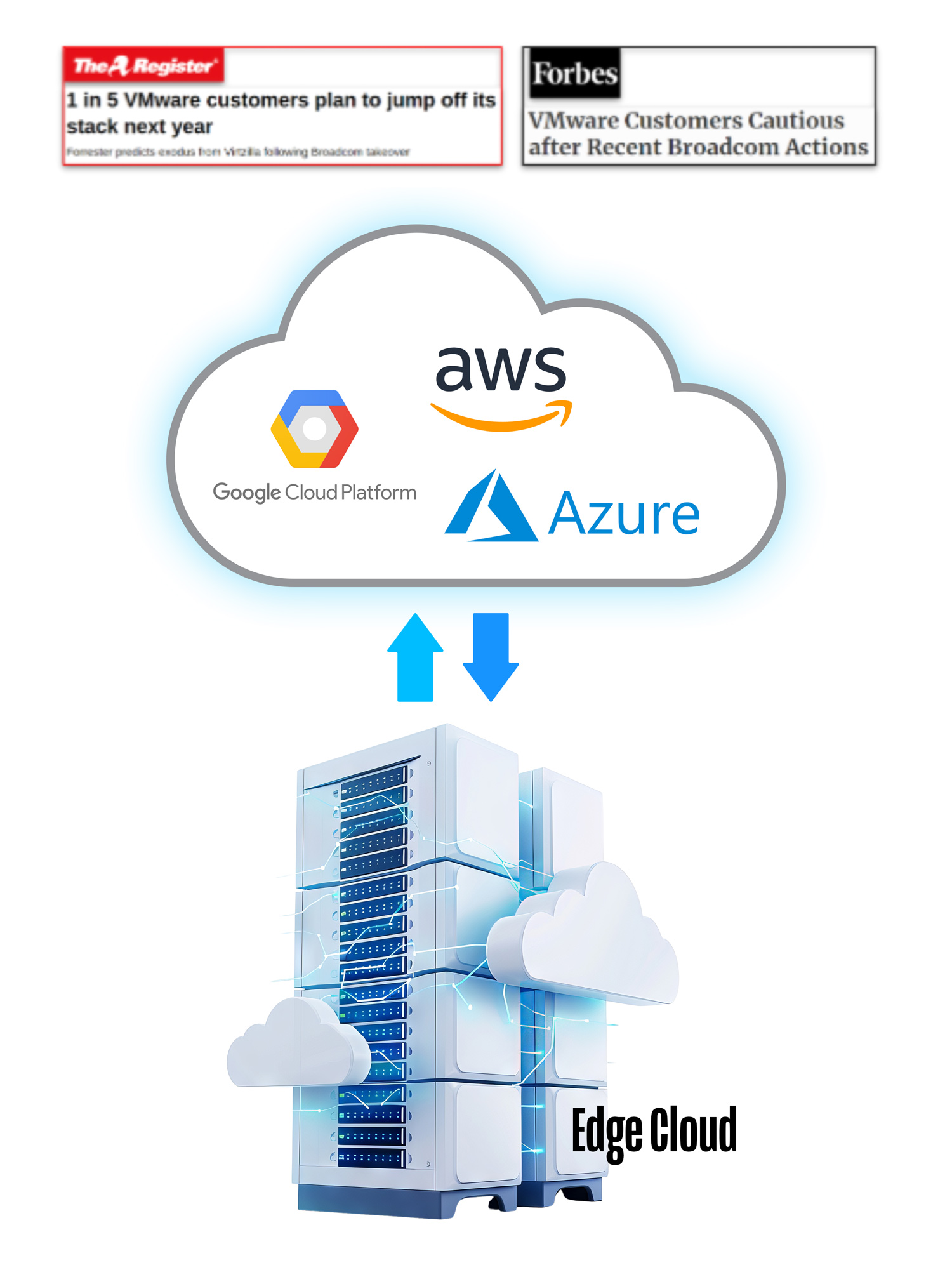
The Problem with Traditional Licensing
Legacy licensing agreements were designed for a different era, one where workloads were predictable, infrastructure lifecycles were long, and IT could plan for five years in advance. Today, that world no longer exists.
High upfront costs: Enterprises often commit millions in CapEx just to get started, paying for capacity that may sit idle.
Overprovisioning by necessity: To avoid being caught short, IT teams buy far more than they need, often 30–50% more than actual usage.
Rigid scaling: Expanding infrastructure means renegotiating licenses, adding more hardware, and waiting for procurement cycles to catch up.
Vendor lock-in: Once an enterprise chooses a licensing model, switching out is costly and complex, which vendors know and exploit.
Mismatch with digital transformation: Modern workloads (AI/ML, edge, cloud-native applications) are dynamic, bursty, and distributed, making rigid licenses a poor fit.
The result: enterprises spend too much, use too little, and remain locked into inflexible agreements.
The Rise of Pay-As-You-Go Models
Public cloud providers such as AWS, Azure, and GCP popularized consumption-based IT: pay only for what you use, scale instantly, and avoid heavy upfront commitments.
The benefits are clear:
-
- Financial alignment → Costs track with actual usage, avoiding wasted spend.
-
- Business agility → Enterprises can scale resources up or down based on demand.
-
- Innovation-friendly → Teams can test, fail fast, and scale successful projects without lengthy procurement.
-
- Predictability and flexibility → Opex replaces Capex, smoothing budget planning.
This model has become the default expectation for IT. The VMware licensing debate is really part of a broader movement: enterprises expect IT infrastructure to work like cloud services.
The below chart compares Traditional Licensing vs Pay-As-You-Go across five key dimensions: Cost Efficiency, Scalability, Flexibility, Risk Reduction, and Management Simplicity.

Public Cloud vs. On-Premises: Different Paths, Same Demand
Not every workload can or should move to the public cloud, despite its advantages. Enterprises are split into two camps:
Those moving to the hyperscalers: Many VMware customers are migrating directly to AWS, Azure, or Google Cloud to escape licensing headaches.
Those who must remain on-premises: Driven by compliance mandates, latency requirements, data sovereignty, or existing on-prem investments, these enterprises need a solution that delivers cloud-like economics on-prem.
For the second group, VMware licensing changes have created an urgent need to find a viable on-premises consumption-based alternative.
The New Frontier: Pay-As-You-Go On-Premises
The question IT leaders are now asking is simple: “Why can’t my on-prem infrastructure work like the cloud?”
This new frontier is all about:
-
- Cloud economics, anywhere: Pay only for what you use, no matter where workloads run.
-
- Elastic scaling: Expand or contract capacity instantly without hardware refresh cycles.
-
- Reduced risk: No more multi-year licensing bets on future growth.
-
- Operational simplicity: Infrastructure that feels more like a service, less like a burden.
Enterprises no longer want to own infrastructure; they want to consume it — whether in the cloud or in their own data centers.
Zadara’s Approach: Cloud Economics Anywhere
While many vendors claim to offer “cloud-like” models, Zadara Sovereign AI cloud delivers a true pay-as-you-go, fully managed infrastructure as a service that stands apart from traditional licensing and even from competitors like Nutanix.
-
- 100% Consumption-Based: No licensing, no upfront costs, no overprovisioning.
-
- Fully Managed Services: Compute, storage and networking delivered as a service, operated by Zadara.
-
- Global Edge Presence: Available in 500+ data centers worldwide, bringing compute and storage close to where enterprises need it.
-
- Elastic Infrastructure: Scale up or down instantly, avoiding costly refreshes and capacity planning risks.
-
- Proven TCO Benefits: Customers routinely cut costs compared to VMware licensing or Nutanix subscriptions.

This model ensures enterprises gain the agility of the cloud, the control of on-premises, and the financial flexibility they need in today’s fast-changing IT environment.
Conclusion: A Future Without Licensing Burdens
The VMware shake-up isn’t just a licensing issue — it’s a catalyst for change. Enterprises are waking up to the reality that legacy licensing is incompatible with modern IT demands.
Pay-as-you-go consumption is the future. Whether workloads live in AWS, Azure, or on-premises, enterprises now demand flexibility, scalability, and cost alignment.
For organizations that need to remain on-prem, Zadara Sovereign AI provides the answer: a cloud experience delivered on-premises, without the licensing traps of VMware or the management burden of Nutanix.
The future of enterprise IT is clear: no licenses, no lock-in, just consumption.