
The landscape of enterprise virtualization has fundamentally shifted since Broadcom’s acquisition of VMware. Korean enterprises are actively seeking VMware alternatives in the post-Broadcom era, while also looking for flexible and cost-effective solutions to counter the rising costs of AWS. The Korean market has specific characteristics and sophisticated requirements, making the search for reliable VMware alternatives more critical than ever.
This comprehensive blog contains differentiated strategies designed to resonate effectively with Korean customers, featuring data-driven analysis of the specific risks faced by VMware customers in the post-acquisition era and offering an in-depth examination of Zadara as the most practical VMware replacement solution available.
Executive Summary: The Shifting Standards of Virtualization and Corporate Response Strategies
For more than two decades, VMware has reigned as the de facto standard in the enterprise virtualization market. However, following Broadcom’s acquisition of VMware, the market has entered an unprecedented period of uncertainty. This is the defining challenge of the post-Broadcom era. The immediate policy changes have made “moving away from VMware” no longer a mere option, but a core long-term risk mitigation strategy.
Organizations worldwide are experiencing sharp cost increases, and as a result, the demand for VMware alternatives has intensified dramatically. Enterprises are now actively evaluating alternative approaches which are cost-effective solutions to counter the rising costs of both VMware and AWS. The search for a comprehensive VMware replacement has become a strategic imperative rather than a tactical consideration in the post-Broadcom era.
The Strategic Need for VMware Replacement in 2026:
Four Major Risks Following the Broadcom Acquisition
Broadcom’s strategy focuses on maximizing profitability by concentrating on a small number of high-revenue enterprise customers. As organizations evaluate VMware alternatives, they must understand the specific threats that have emerged:
Explosive Cost Shock
Following the termination of perpetual licenses and the shift toward a bundle-centric policy, industry reports have increasingly highlighted customer cases where renewal costs have risen by several hundred percent. When searching for VMware alternatives free from such cost volatility, organizations discover that the traditional licensing model is no longer sustainable. Publicly reported examples include a UK university that experienced a dramatic increase in annual costs, as well as statements from AT&T citing substantial price hikes.
Forced Product Bundling
The consolidation of 168 individual products into four core bundles, such as VCF (VMware Cloud Foundation), forces customers to purchase unnecessary features like vSAN and Tanzu. This bundling strategy has accelerated the search for VMware alternatives that offer more flexible, consumption-based pricing models.
Collapse of the Partner Ecosystem
The termination of contracts with low-profitability small-to-medium resellers and partners is causing local technical support channels to disappear or increase in cost. This ecosystem disruption has made finding reliable VMware replacement solutions even more urgent for organizations dependent on local support.
Concerns over Reduced R&D and Technical Support
Large-scale restructuring has raised fears of slowed long-term product innovation and declining quality of technical support. Educational and non-profit institutions with limited budgets are particularly affected, driving increased interest in VMware alternatives that provide comprehensive support models.
Zadara as a Comprehensive VMware Alternative for the Post-Broadcom Era: Solution Comparison
When evaluating VMware alternatives in Korea, Zadara provides a “hyperscaler-like cloud experience on-premises” that simultaneously resolves VMware’s complex licensing structure and the burden of hardware management. This VMware alternative offers a fundamentally different approach to enterprise virtualization.
Zadara delivers true multi‑tenancy for sovereign AI, compute and data services. Tenant instances are isolated by design, guaranteeing performance, security and redundancy while the customers scale. They start small and grow large!
The customers demand performance and compliance. With Zadara, every tenant is fully isolated, data is encrypted in motion and at rest, and zero-trust networking ensures protection.
Zadara and its partners operate the infrastructure on behalf of end-customers, freeing IT teams from routine maintenance, patching, and upgrades. This managed service approach allows internal IT resources to focus on strategic initiatives rather than infrastructure management.
| Comparison Item | VMware | Zadara | Core Value |
| Cost Model | CapEx + License Fees (Separate HW purchase + high SW subscription fees) | 100% OpEx (Pay-as-you-go) (Includes HW, SW, and maintenance) | Zero upfront investment; Secure financial liquidity |
| Licensing Policy | Per-Core billing; forced complex bundling (VCF/VVF) | Billing based on used VM resources (vCPU/RAM) and storage capacity | Transparent cost structure without forced bundles |
| Operations Management | Direct operation by the customer or separate expensive maintenance contracts required | 24x7x365 Fully Managed Service (Includes troubleshooting and upgrades) | Reduction in operational personnel resources and costs |
| Compatibility/API | Uses proprietary APIs; steep learning curve | AWS-compatible APIs; Terraform and Ansible supported as is | Developer-friendly environment |
| Infrastructure Refresh | HW replacement (Tech Refresh) costs every 3–5 years | Complimentary HW/SW upgrades during the service period | No hardware depreciation required |
Key Insights for the Post-Broadcom Era: Beyond Simple Virtualization Replacement
Zadara is not just another entry in the VMware alternatives market. Zadara eliminates both hardware purchases (CapEx) and software license fees, converting them into a single monthly service (OpEx) to maximize financial efficiency. The SLA guarantee policy proves enterprise-grade stability, making it a compelling VMware replacement for organizations seeking predictable costs.
Zadara has been recently named a DCIG Top 5 VMware Alternative in not one, but two separate analyst reports:
- 2026–27 DCIG Top 5 VMware Alternatives SLED Edition
- 2026–27 DCIG Top 5 VMware Alternatives SME Edition
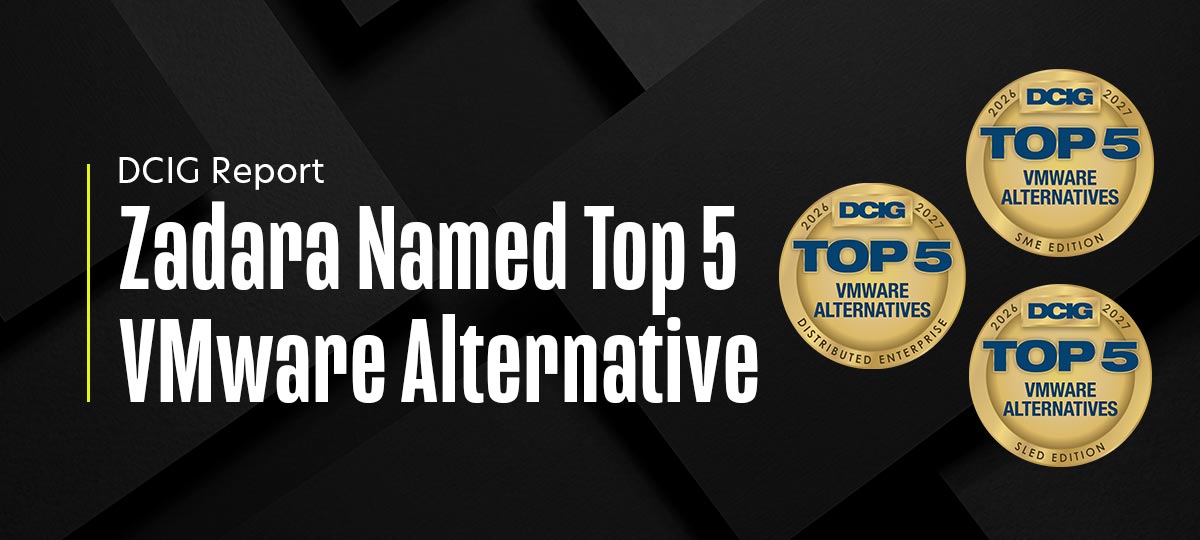
While each report is tailored to a different audience, both reached the same conclusion: Zadara zCompute stands out as a Top 5 VMware alternative based on rigorous evaluation criteria, including deployment flexibility, licensing models, data resilience, hybrid cloud support, and operational simplicity.
Success Stories: Global and Domestic Adoption of VMware Alternatives in the Post-Broadcom Era
Major IDCs, MSPs, and global enterprises are utilizing Zadara as a VMware replacement or adopting it as a foundational platform to build their own public or hybrid cloud services. Particularly in terms of cost, Zadara can be designed to minimize or simplify “hidden billing variables”—such as data egress or request-based (API) billing that often become problematic in public clouds due to rapid accumulation based on usage patterns—making it advantageous for increasing TCO predictability. Consequently, Zadara is being widely utilized not only as an alternative to mitigate renewal and operational risks in VMware environments but also as an “Alternative Cloud” or “Hypercloud” platform for those seeking to reduce cost volatility from hyperscalers.
[Case 1] – Korean Enterprises and Startups: Hybrid Cost Optimization
(Note: The two scenarios below from Korea are anonymized and based on real-world adoption patterns. Actual results may vary depending on workload characteristics, contract terms, and operating models).
Startup A:
As cost volatility increased during AWS usage, a Korean AI-Driven Technology Startup migrated a portion of its workloads to Zadara cloud (and not to VMware). According to internal calculations that included data transfer fees and transaction costs, operating expenses were reduced by approximately 30–40%.
Enterprise B:
As hyperscaler costs grew unpredictably, a leading global manufacturing enterprise (headquartered in Seoul, South Korea) pursued a strategy of shifting core workloads to a private cloud.
However, their existing VMware-based private cloud couldn’t deliver desired cost efficiency due to licensing costs and renewal risks.
After evaluating multiple options, Enterprise B selected Zadara as an alternative prioritizing operational continuity without requiring extensive retraining of operations teams, along with simplified and predictable cost structures—and proceeded with a phased migration (using RackWare) based on a consumption-based pricing model and fully managed operations.
They are also planning to migrate their AWS S3 data to Zadara object storage.
[Case 2] – Kocho (UK Mid-Market MSP): Complete VMware Replacement
https://www.zadara.com/customers/kocho/
Challenge: Following Broadcom’s acquisition, growing uncertainty around licensing and pricing made budgeting increasingly difficult. Infrastructure aging required an end-of-life refresh, but CapEx-based investment posed a significant financial burden. The search for VMware alternatives became critical for business continuity.
Solution: Adopted a fully managed operating model based on Zadara zCompute as their primary VMware replacement. This VMware alternative transferred day-to-day infrastructure operations to Zadara while shifting from CapEx to OpEx with consumption-based pricing.
Result: Successfully mitigated VMware renewal and licensing risks while simplifying cost structure and improving predictability. The VMware replacement reduced infrastructure maintenance burdens, allowing the team to focus on application and customer service enhancement.
[Case 3] – Hybrid Migration Strategy / Matrix InnerCloud
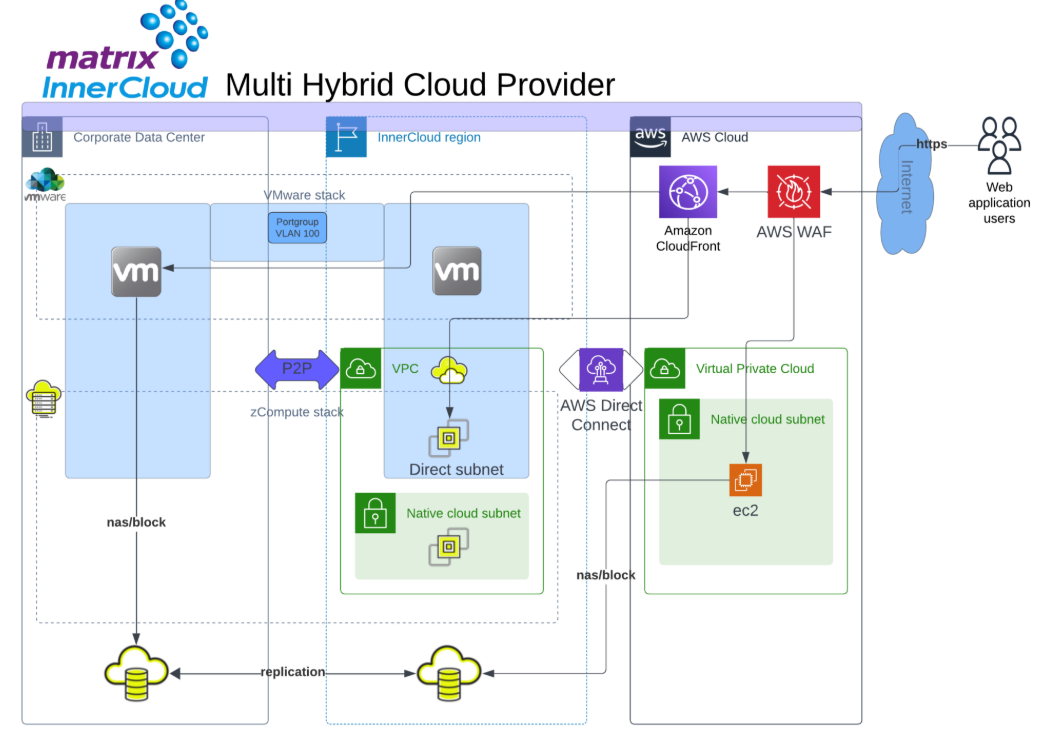
A transition doesn’t require a complete “rip-and-replace” approach. Zadara supports a hybrid transition strategy where VMware and zCompute can operate in parallel within the same environment, enabling staged migration of validated workloads first. As organizations explore VMware alternatives, this flexibility allows them to adjust migration speed and scope in line with business conditions.
As a public reference case – the Israeli managed cloud service provider Matrix InnerCloud ( https://www.zadara.com/customers/matrix/) adopted Zadara and migrated customer workloads sequentially over a period of three to four months in a VMware-coexisting architecture. This approach minimized transition risk and service disruption while improving both cost efficiency and operational simplicity.
In addition, by allowing customers to mix and match VMware and zCompute based on their requirements, Zadara demonstrates the flexibility to adjust migration speed and scope in line with business conditions.
Challenge
- Increasing cost and operational complexity while delivering multi-tenant IaaS services
- Additional product purchases and technical overhead required to implement multi-tenancy in VMware environments
- Need for a transition strategy that reduces VMware dependency while maintaining service continuity
Solution
- Adopted Zadara zCompute with built-in multi-tenancy (no separate add-ons required)
- Leveraged Zadara’s fully managed service for infrastructure operations and upgrades to reduce operational burden
- Operated VMware and zCompute side-by-side to support staged migration and mix-and-match service configurations
- Utilized direct subnet-based connectivity to integrate flexibly with existing platforms and services
Result
- Migrated customer workloads in phases over approximately 3–4 months, minimizing transition risk and service impact
- Improved operational efficiency and cost structure while reducing the complexity of executing migrations
- Demonstrated that customers can choose coexistence or gradual migration—allowing flexible adjustment of migration scope and pace based on business needs
* Case study of Matrix InnerCloud, an Israeli managed service provider (MSP);
Evaluating VMware Alternatives: Migration Guide and Risk-Free Transition Process
The transition from VMware to Zadara can be executed through a process that utilizes standard procedures and proven migration tools to control downtime and operational risks in stages.
Discovery & Analysis Phase
When evaluating VMware alternatives, organizations should collect comprehensive usage data from their current VMware environment, including CPU/RAM utilization, storage capacity/IOPS, and key traffic patterns. They can use either RVTool or different assessment tools. This analysis helps categorize target workloads for migration to the chosen VMware replacement solution.
Priority should be given to workloads in the order of Dev/Test → Non-core → Core, documenting downtime tolerance, maintenance windows, and security/regulatory requirements. This systematic approach ensures that the VMware alternative implementation meets all operational requirements.
Design & Proof of Concept
The selected VMware replacement should undergo thorough testing through a proof of concept phase. For Zadara as a VMware alternative, this involves finalizing basic network and security designs (VPC, DVS, subnets, security groups) and operational standards within the Zadara environment.
Migration feasibility verification during the PoC includes testing sample VMs using V2Z or partner tools to check downtime, network continuity, and operational procedures. This phase also assesses the reusability of existing automation assets from an AWS-compatible API/IaC perspective.
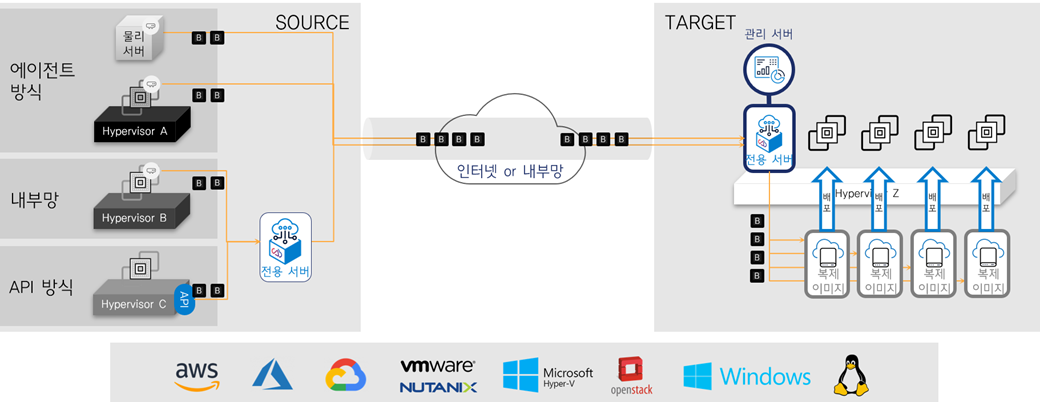
Migration Execution with Minimal DownTime
Based on target environment requirements, migration to Zadara is carried out using Zadara V2Z tool or proven, certified partner tools such as CloudAny, RackWare and Cirrus Data Solutions Inc. to handle VMDK conversion and deployment. After validating stability through small-scale pilots, the migration scope is gradually expanded in a phased manner.
Validation & Optimization
Post-migration validation ensures that the VMware alternative meets all performance, security, and operational requirements. This includes inspecting data integrity, performance metrics, security policies, backup/DR capabilities, and operational runbooks.
Implementation of auto-scaling and policy-based operations helps reduce over-provisioning and establishes usage-based cost optimization, maximizing the benefits of the VMware replacement solution.
Cost-Effective VMware Alternatives Free from Licensing Complexity
Organizations seeking VMware alternatives free from complex licensing structures find that Zadara’s consumption-based model eliminates the traditional barriers associated with enterprise virtualization. Unlike conventional VMware alternatives that may still require significant upfront investments, Zadara’s OpEx model provides immediate financial relief.
This approach to VMware replacement ensures that organizations can scale resources based on actual demand rather than projected capacity, resulting in more efficient resource utilization and cost management.
More details can be found at https://www.zadara.com/blog/2025/08/28/the-shift-from-licensing-to-pay-as-you-go-in-enterprise-it/.
Conclusion: The Golden Time for VMware Replacement with Zadara
Since Broadcom’s acquisition ushered in the post-Broadcom era, the VMware ecosystem has undergone a fundamental transformation affecting licensing models, purchasing structures, and support channels. The question of whether to continue with VMware is no longer purely technical—it has become a strategic management decision about controlling financial and operational risk.
The market for VMware alternatives has matured significantly, with solutions like Zadara offering highly practical and proven VMware replacement options. Organizations evaluating VMware alternatives will find three core values in Zadara’s approach: simplified cost structures through consumption-based pricing, fully managed full-stack platforms that reduce operational burden, and phased migration paths using proven tools that minimize transition risk.
VMware alternatives like Zadara are not merely virtualization replacements, they represent strategic options that reduce post-VMware uncertainty by delivering predictable cost structures and clearly defined operational responsibility. As a comprehensive VMware alternative, Zadara provides AWS-compatible APIs and UI for operational continuity, establishing a foundation for modernization that enables organizations to extend existing capabilities toward cloud-native architectures, Kubernetes, and AI workloads.
In the post-Broadcom era, the time for evaluating VMware alternatives is now. Organizations that act decisively in implementing a VMware replacement strategy will be better positioned to control costs, reduce operational complexity, and maintain competitive advantage in an increasingly dynamic technology landscape.